

Doing some of your own car maintenance can save real money over time, and a handful of tasks require little more than basic tools and a bit of patience. But other jobs carry enough risk — to the vehicle, or to you — that they’re worth leaving to a trained technician, even if it costs more upfront. Knowing where that line sits helps you save money without taking on more risk than the savings are worth.
Tasks Most People Can Safely Do Themselves
Checking and topping off fluids.
Oil, coolant, brake fluid, power steering fluid, and washer fluid all have visible level markers, and topping them off requires no special skill — just the right fluid type for your vehicle.
Replacing wiper blades.
Nearly every wiper blade snaps or clips into place, and replacement takes a couple of minutes with no tools required.
Changing air filters (engine and cabin).
Both are usually accessible without tools, held in place by simple clips, and replacing them yourself can cost a fraction of what a shop charges for the same part and labor.
Replacing headlight and taillight bulbs.
On many vehicles this is a straightforward swap, though some newer cars require removing panels or bumpers to access certain bulbs, which changes the calculation.
Checking and adjusting tire pressure.
A tire pressure gauge costs very little, and correct pressure improves fuel economy, tire life, and handling.
Cleaning battery terminals.
Corrosion on battery terminals can cause starting problems. A wire brush and some baking soda solution handle this safely in a few minutes.
Tasks That Are Possible But Require More Skill and Tools
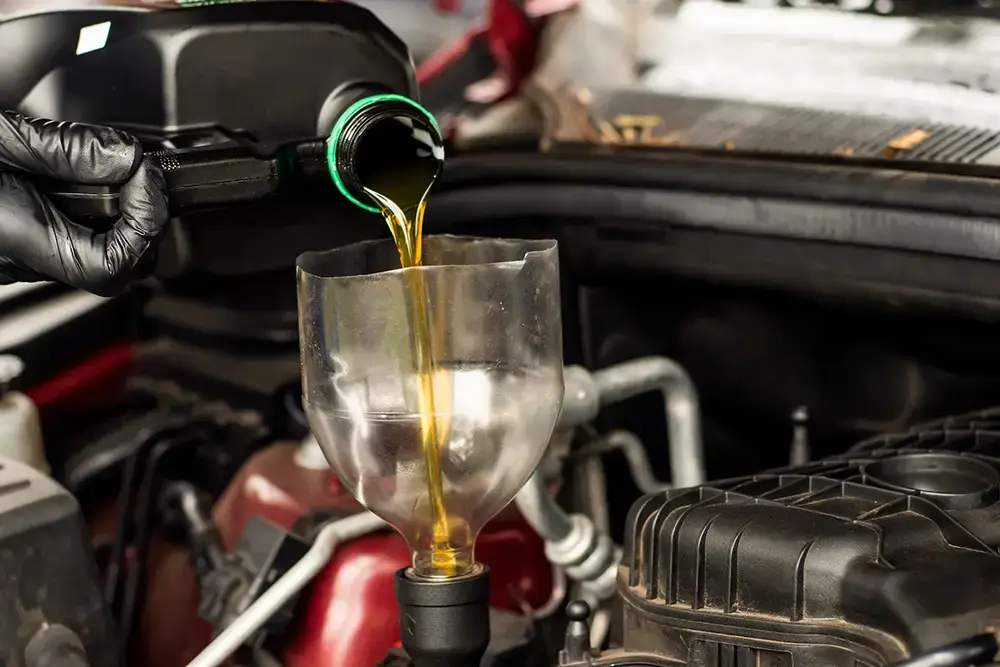
Changing your own oil.
This is a classic DIY task, but it requires proper disposal of used oil, the right tools to avoid stripping the drain plug, and a way to safely lift the car. It’s a good candidate for DIY if you have the setup; otherwise, the cost difference versus a quick-service shop is often small.
Replacing brake pads.
Doable with the right tools and some mechanical confidence, but a mistake here directly affects your ability to stop the car. If you’re not fully comfortable with the process, this is worth paying a professional for.
Replacing a car battery.
Usually simple, though some vehicles require disconnecting components in a specific order or reprogramming systems that reset with a battery change.
Tasks Better Left to a Professional
Anything involving the transmission.
Transmission repair requires specialized tools, fluid, and diagnostic equipment. Mistakes here are expensive and can cause irreversible damage.
Engine diagnostics beyond a basic code read.
A code reader can tell you what triggered a warning light, but interpreting that code correctly and identifying the actual root cause often requires training and experience.
Suspension and steering work.
These systems are directly tied to vehicle safety and require precise torque specifications and alignment equipment most home garages don’t have.
Air conditioning system repair.
Refrigerant handling requires certification in most places, and improper handling can damage the system or release refrigerant that’s harmful to the environment.
Electrical system diagnosis.
Modern vehicles have complex, interconnected electrical systems. Diagnosing an issue without the right equipment often leads to replacing parts that weren’t actually the problem.
Where an Extended Service Contract Fits In
DIY maintenance is a good way to reduce routine costs, but it doesn’t offer protection against major mechanical or electrical failures — the kind that usually require professional diagnosis and repair regardless of how mechanically inclined you are. An extended vehicle service contract picks up where routine maintenance leaves off, covering the larger, less predictable repairs that go well beyond a weekend project — particularly valuable once a factory warranty is no longer absorbing those costs.
The Cost of Waiting
Small problems compound. A minor coolant leak ignored for months can lead to an overheated, warped engine. Worn brake pads ignored long enough damage rotors and calipers. In nearly every case, the cost of addressing a warning sign early is a fraction of the cost of the failure it eventually causes.
If your factory warranty has expired, this math matters even more, since every repair — early or late — now comes out of your own pocket. An extended vehicle service contract can offset the cost of the major repairs these warning signs sometimes point to, but the signs themselves are still worth acting on quickly, since faster diagnosis almost always means a smaller bill.
Related reading: